Jeita Grotto, Lebanon: A Guide to the Underground River and Crystal Caves
Lebanon is not a big country, but it hides one of the most beautiful cave systems in the world in a green valley just north of Beirut. Jeita Grotto is really two caves stacked one above the other: a dry upper gallery filled with crystal formations the size of buildings, and a lower cave where you board a small boat and glide across a black underground river. It has been a Lebanese national symbol for decades, and it was a finalist in the New 7 Wonders of Nature competition. Once you have seen it, you understand both facts completely.
This guide explains how a visit works, what you will see in each cave, how to get there from Beirut, and the tips that help you time it right.
Where Is Jeita Grotto?
The caves sit in the valley of Nahr al-Kalb, the Dog River, near the town of Jeita in the Keserwan district, about 18 kilometres north of Beirut and around five kilometres inland from the Mediterranean coast. In normal traffic the drive from the capital takes well under an hour, which makes Jeita the classic half day trip from the city. Taxis and organised day tours run the route constantly, and many tours combine Jeita with the shrine at Harissa and the ancient port of Byblos for a full day out.
The setting is part of the charm. You arrive in a steep, pine covered valley with the river running below, and the cave complex has landscaped gardens, a small train and a cable car connecting its different levels. It feels like a little mountain resort built around a geological wonder.
Two Caves in One Visit
Jeita’s total explored length runs to nearly nine kilometres, which makes it the longest cave complex in the Middle East. Visitors see the finest parts of both levels, and the contrast between them is what makes the place special.
The Upper Grotto: a walk through a stone forest
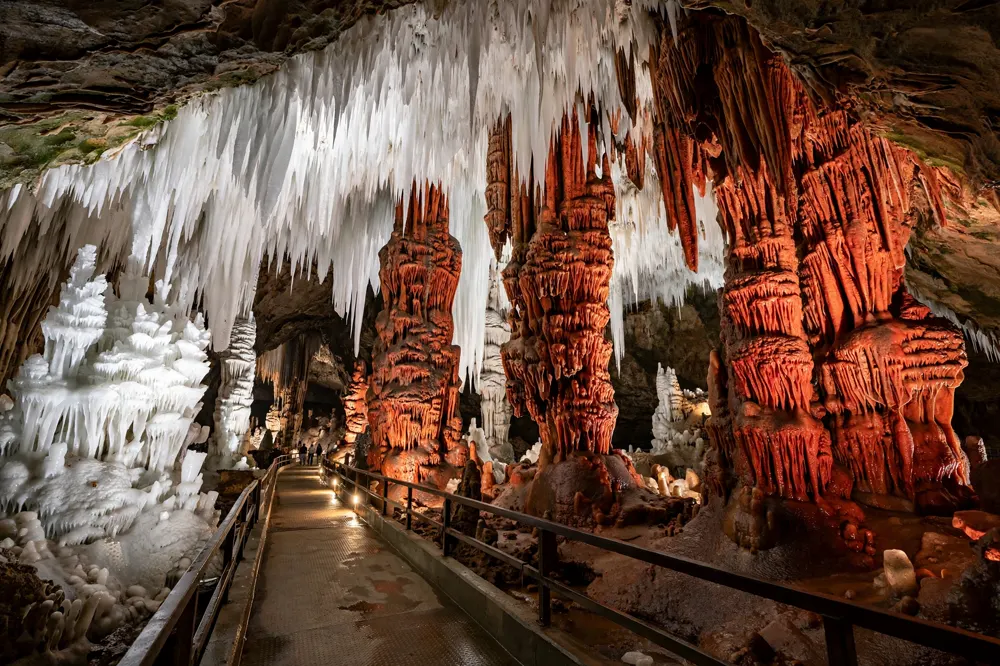
Lebanese speleologists only discovered the upper galleries in 1958, finding them about 60 metres above the lower cave. You reach them through a 117 metre access tunnel, and then follow a walkway through three enormous chambers over a route of about 750 metres, out of the upper cave’s total 2,130 metres.
The first chamber, the White Chamber, holds the cave’s most famous treasure: the longest known stalactite in the world, a hanging spear of pure white calcite 8.2 metres long. White formations here are pure calcite, untouched by impurities. The second, the Red Chamber, soars up to about 106 metres high, and its formations glow rust red because of iron oxide in the rock, which in Lebanon’s warmer climate produces this rich colour rather than the browns seen in cooler countries. The third chamber is the biggest of all, more than 120 metres high. Everywhere you look there are columns, curtains, draperies, mushroom shaped formations and still ponds, all picked out by carefully designed lighting. The scale is hard to take in. Some of these formations have been growing, drip by drip, for tens of thousands of years.
The Lower Grotto: a boat ride on an underground river
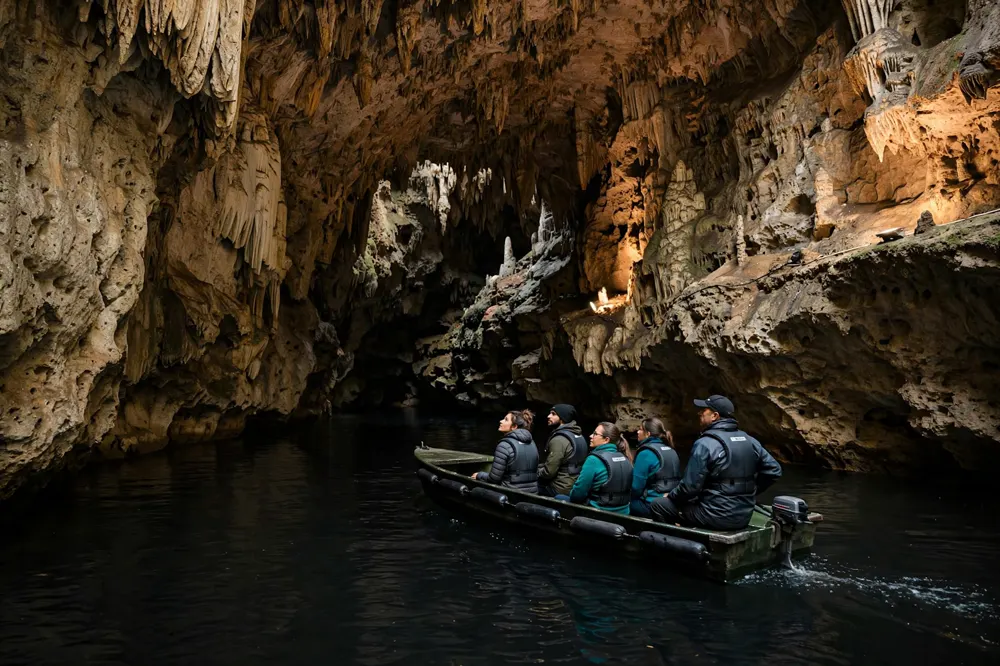
The lower cave is a different world again: darker, quieter and full of water. It was rediscovered in 1836 by the Reverend William Thomson, an American missionary who ventured in with a boat and reportedly fired a pistol shot to test the echo, deciding quite sensibly not to push deeper into the dark alone. Explorers have since followed the river for about 6,200 metres into the mountain.
Visitors board small electric boats and glide for roughly 500 metres along the smooth underground river, past rock formations reflected in the water. The ride is short but unforgettable, silent except for dripping water and the gentle movement of the boat. This river is not just scenery. It is the principal source of the Nahr al-Kalb and supplies fresh drinking water to more than a million people in greater Beirut, which is why the far reaches of the cave are protected and closed to visitors.
How a Visit Flows
Buy your ticket at the entrance, then use the cable car and the small tourist train to move between the site entrance, the upper cave and the lower cave. The usual order is the upper cave first, walking the gallery at your own pace, then down to the lower cave for the boat ride. Plan on around two hours for the whole visit, longer if you linger in the gardens or stop for coffee with a valley view. The walkways in the upper cave are well built, but they can be damp, so wear shoes with some grip and expect plenty of steps.
Best Time to Visit
Jeita generally opens Tuesday to Sunday and closes on Mondays, with daytime hours roughly from 9 in the morning to 5 in the afternoon. These details can shift with the season and local circumstances, so check the official site or ask your hotel before setting out. One genuine quirk to know: in winter, when heavy rain raises the underground river, the lower cave sometimes closes for safety while the upper cave stays open. If the boat ride is the heart of your trip, spring, summer and autumn are the safer bets, and the valley is at its greenest in spring.
Weekends and public holidays bring crowds of local families, and school groups visit on weekday mornings in term time. Arriving at opening time on a weekday is the closest thing to having the chambers to yourself.
Practical Tips
Photography rules inside the caves are strict and cameras are generally not permitted inside, so be ready to simply enjoy it with your eyes and check the current policy at the ticket desk. Keep voices low in the lower cave, not because anyone will shush you, but because the silence on that black water is half the experience. Bring a light layer, since both caves feel cool after the Lebanese sun outside. And if you are building a day of it, the gondola ride up to Harissa, with its huge statue of Our Lady of Lebanon and sweeping views over Jounieh Bay, pairs beautifully with Jeita and sits only a short drive away.
Many countries have a show cave. Lebanon has a cathedral of crystal above a river in the dark, close enough to the capital for a morning trip. Jeita Grotto deserves every bit of its fame, and it is usually the sight that visitors to Lebanon talk about first when they get home.