Carlsbad Caverns, New Mexico: Big Room, Bats and a Complete Visitor Guide
Stand at the Natural Entrance of Carlsbad Caverns at sunset in summer and something extraordinary happens. First one bat, then a dozen, then a swirling column of hundreds of thousands of them pours out of the cave mouth and streams away over the desert to hunt. It is one of the great wildlife sights in America, and it happens right above one of the most spectacular cave chambers anywhere on Earth. Carlsbad Caverns, in the Guadalupe Mountains of southeastern New Mexico, gives you both in a single day.
This guide covers the two ways down, the famous Big Room, the evening bat flight, and all the practical planning details, because this park rewards people who arrive prepared.
Where It Is and How to Get There
Carlsbad Caverns National Park protects a reef limestone cave system under the northern edge of the Chihuahuan Desert. The visitor center sits about seven miles off the highway, up a winding scenic road with big desert views, and the town of Carlsbad is roughly a 25 minute drive away with hotels and restaurants. The closest major airport is El Paso, Texas, around two and a half hours by road. There is no public transport to the cave, so this is a driving trip, and the drive itself, all cactus, yucca and distant mountains, is part of the experience.
The park preserves far more than one cave. Over a hundred caves are known within its boundaries, including Lechuguilla, one of the deepest and most beautiful caves in the world, which is closed to the public and open only to research and survey teams. The cavern you visit is the showpiece, and it has been wowing visitors since the 1920s.
Two Ways Down: the Trail or the Elevator
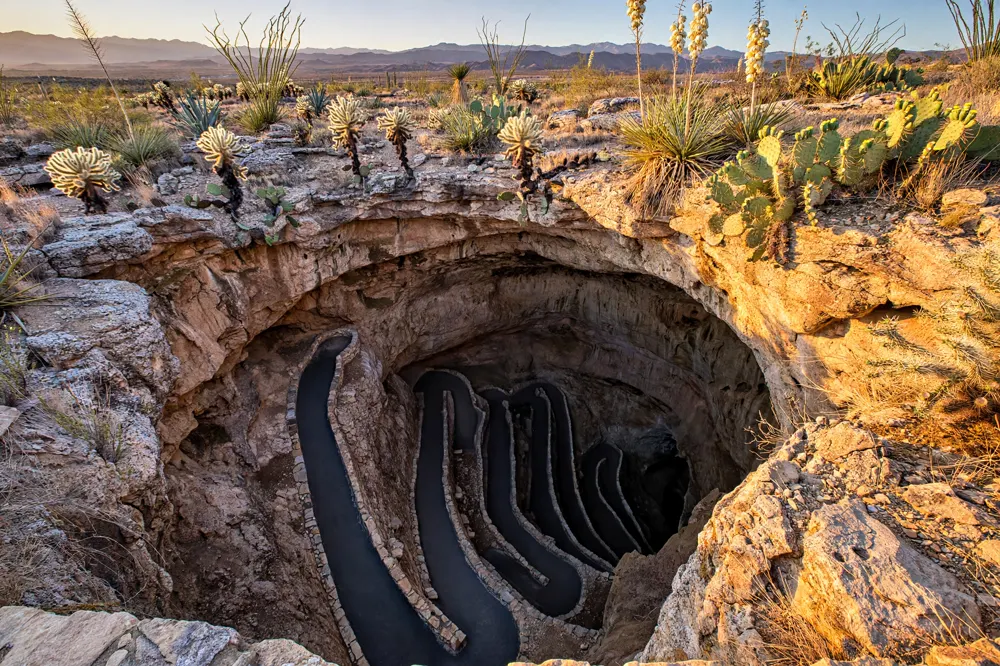
You have a real choice here, and it shapes your whole visit. The Natural Entrance Trail is the way the first explorers went in. It is a paved but steep path of about 1.25 miles that drops roughly 750 feet through a series of switchbacks, passing the amphitheater like entrance and descending into steadily deepening twilight. It takes most people 40 minutes to an hour, it is a proper workout on the knees, and it gives you a sense of the cave’s depth that no lift can match.
The alternative is the elevator, which drops the same 750 feet in about a minute and lets you out at an underground rest area right beside the Big Room trail. It is the sensible choice for anyone with limited mobility, tight timing, or small children. The classic strategy is to walk down the Natural Entrance Trail in the morning and ride the elevator back up at the end. You get the full experience and save your legs.
The Big Room: a Cathedral With a Roof of Stone
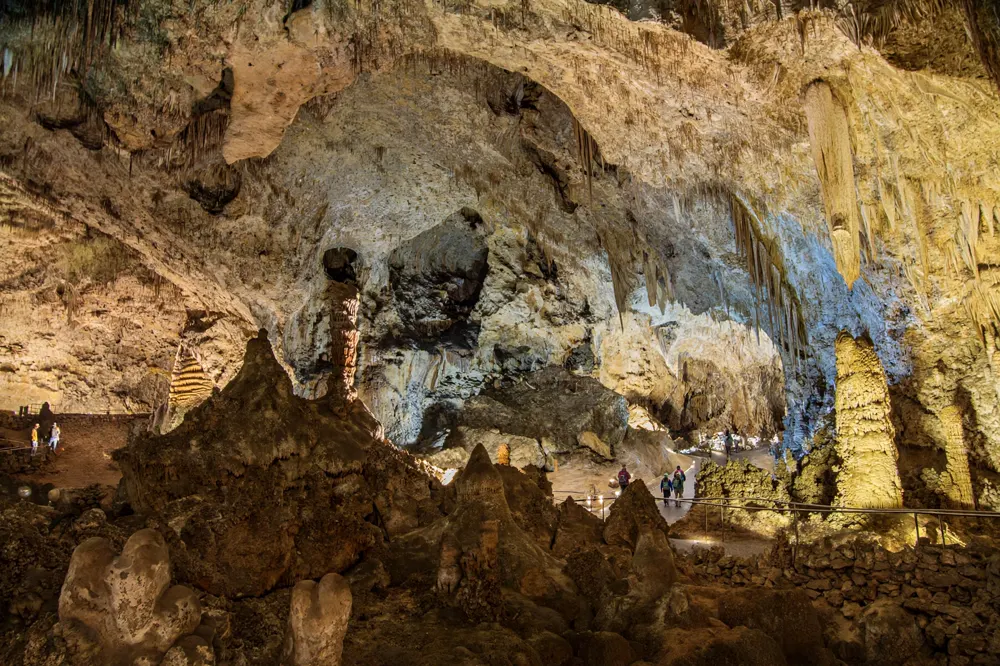
The Big Room is the main event, and its name undersells it. This single chamber is nearly 4,000 feet long, up to 625 feet wide and 255 feet high, with a floor area of about 8.2 acres. Actor Will Rogers called it “the Grand Canyon with a roof over it”, and standing in the middle of it, that feels about right.
A mostly level trail loops around the room for about 1.25 miles, with a shortcut that cuts the walk to roughly 0.6 miles, and much of the main trail is wheelchair accessible with some assistance.
Formations to look for on the loop
Along the way you pass formations with names earned over a century of guiding: the Giant Dome, a column over 60 feet tall; the Rock of Ages; the Painted Grotto with its delicately coloured walls; and the Bottomless Pit, a shaft that drops away into blackness beside the path. The cave temperature stays at a constant 56 degrees Fahrenheit, so the walk is cool and comfortable even when the desert above is baking.
When ranger led tours beyond the self guided trails are running, look for routes like the King’s Palace, which visits a set of richly decorated chambers on a lower level. Schedules change, so check the park website in the days before your visit.
The Bat Flight: the Evening Show You Must Not Miss
The cave’s summer residents are Brazilian free tailed bats, also called Mexican free tailed bats, and the colony numbers in the hundreds of thousands. From around Memorial Day weekend through October, the park runs a free Bat Flight Program at the outdoor amphitheater beside the Natural Entrance. A ranger gives a talk as the light fades, and then the bats begin to leave, spiralling out in a living river that can keep flowing for half an hour or more.
The ground rules for watching
Two rules are absolute: arrive well before sunset to get a seat, and put every electronic device away. Cameras, phones and recording equipment are not allowed during the flight, because light and noise disturb the bats. Honestly, the ban improves the evening. You just sit in the desert dusk and watch. If you are an early riser, you can also come back before dawn to see the bats returning, diving into the entrance one by one after a night of hunting insects over the desert and farmland.
Planning Your Visit: Reservations, Fees and Timing
Carlsbad uses a timed entry system. You need to reserve an entry time in advance through Recreation.gov for a small booking fee, and then pay the park admission on arrival. Admission is currently 15 dollars for visitors aged 16 and over, with children 15 and under free, but fees can change, so confirm the current details before you travel. Cavern entry hours are more limited than people expect: the last entry is in the early afternoon, and the visitor center typically runs from morning to late afternoon. Do not roll up at 4 pm expecting to go underground, because you will be disappointed.
A good plan looks like this: reserve a morning entry, walk the Natural Entrance down, loop the Big Room slowly, ride the elevator up for lunch at the surface, explore the desert nature trail in the afternoon, then take your seat at the amphitheater by early evening for the bats. Staying overnight in Carlsbad town makes the late finish easy.
Practical Tips
Bring a light jacket for the 56 degree cave, sturdy closed toe shoes, and plenty of water for the desert surface, where summer heat is serious. Food and drinks other than plain water are not allowed inside the cavern, so eat before you descend. Photography is welcome in the Big Room, and a phone camera handles the lit formations surprisingly well, but skip the flash photography of any bats you see resting, and never touch formations, because skin oils permanently stop their growth.
Give Carlsbad a full day and an evening. Plenty of caves are beautiful, but very few send you home with a quarter of a million bats swirling over your head as the stars come out.