Phong Nha Cave, Vietnam: The Complete Visitor Guide
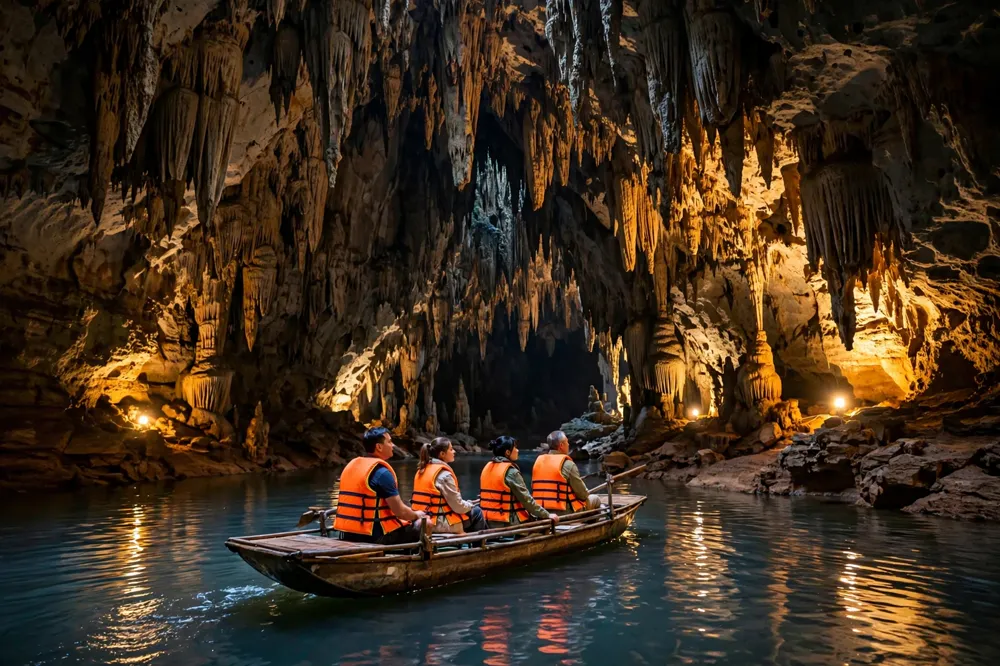
There is a moment on every Phong Nha Cave trip that people talk about afterwards. Your wooden boat drifts towards a black opening in a limestone cliff, the engine cuts out, and the crew picks up the oars. Suddenly there is no motor noise at all, just water dripping from the ceiling and the soft splash of paddles. Then the cave lights come on, and a whole underground world of stone curtains, towers and frozen waterfalls appears around you. It is one of the finest cave experiences in Southeast Asia, and it is surprisingly easy to do.
This guide covers where the cave is, what the boat trip is really like, how to get there, when to go, and the small details that make the day run smoothly.
Where Is Phong Nha Cave?
Phong Nha Cave sits inside Phong Nha-Ke Bang National Park in Quang Binh Province, in central Vietnam. The park is a UNESCO World Heritage Site, recognised for its ancient limestone karst landscape, which is among the oldest in Asia. The cave entrance is near the small town of Son Trach, also called Phong Nha village, where most visitors stay. The town has grown around cave tourism, so you will find hotels, cafes and tour offices all along its main street.
The park protects hundreds of caves and grottoes hidden under jungle covered mountains. Phong Nha is the most famous of them and the one most people visit first, partly because the experience is so gentle. You do not need climbing gear, a head torch or any caving experience. You sit in a boat and float in.
A Short Story Behind the Name
Phong Nha roughly translates as “wind through the teeth”. The name comes from the stalagmites that once hung around the cave mouth, which local people thought looked like rows of teeth with the wind whistling between them. It is a good name, because the cave really does feel alive with moving air and moving water.
Local communities knew the cave for centuries and used its chambers for shelter and worship. French explorers surveyed parts of it in the late 19th and early 20th centuries, and British cave expeditions mapped much more of the system in the 1990s. The surveyed cave stretches about 7,729 metres and contains 14 main grottoes, and even today not all of it is fully explored. The underground river that flows through it runs for nearly 14 kilometres, which makes it one of the longest underground rivers on the planet.
The Boat Trip: What the Visit Is Actually Like
On the Son River
Every visit starts at the boat station in Phong Nha village. Boats carry up to about twelve passengers, and many travellers share a boat to split the cost. From the dock it is a relaxing ride of roughly 30 minutes up the Son River. The scenery on this part alone is worth the trip: emerald water, farmers working flat green fields, water buffalo grazing on the banks, and jagged limestone peaks rising behind everything. Keep your camera ready, because some of the best photos of the day happen before you even reach the cave.
As you approach, the cave mouth appears ahead, a wide arch around 20 to 30 metres across and about 10 metres high, with the river flowing straight out of the darkness. It looks like the mountain has opened its mouth to swallow the river whole.
Inside the Cave
Once inside, the engine is switched off and the boat is rowed for the rest of the journey. Visitors are allowed to travel about 1,500 metres into the cave, which is the most beautiful section. The ceiling soars above you in places, and coloured lighting picks out formations with names locals have given them over the years, including the Fairy Cave and the Royal Court chambers. You will see stalactites hanging like chandeliers, stalagmites rising like statues, and stone draperies that look soft enough to touch, even though they are solid rock built drop by drop over millions of years.
Halfway through, the boat stops and you get out onto a sandy bank inside the cave. From there you walk a short loop on foot through a dry, well lit section, which gives you a closer look at the formations and a
real sense of the cave’s size. Then it is back onto the boat for the quiet float back out into daylight. The
whole trip, river ride included, usually takes around two to three hours.
How to Get to Phong Nha
Most people travel via Dong Hoi, the provincial capital about an hour’s drive from the cave. Dong Hoi has a small airport with flights from Hanoi and Ho Chi Minh City, and a railway station on the main north to south line, so sleeper trains from Hanoi or Da Nang work well too. From Dong Hoi, taxis, hotel shuttles and local buses run to Phong Nha village.
If you are coming from Hue, expect a drive of roughly four hours, and many travellers visit Phong Nha as a long day tour from there, although staying at least one night in the village is far more relaxed. Coming from Hanoi, you are looking at about 500 kilometres, so an overnight train or a flight to Dong Hoi is the sensible option.
Best Time to Visit
The dry season, roughly from February to August, is the best window. River levels are stable, the boat trip runs normally, and the countryside is green and bright. March to May is a sweet spot, with warm weather before the real heat of summer arrives.
Try to avoid the rainy season from about September to November. This part of Vietnam floods seriously in those months, and the cave can close for days at a time when the river runs too high. If you are travelling then, keep your plans flexible and check conditions locally before you go.
Tickets and Practical Details
You pay two things: a per person entrance ticket and a fee for the boat, which is charged per boat rather than per person. That is why solo travellers often wait at the dock to form a group, and it is worth doing, because a full boat makes the ride very affordable for everyone. Prices change from time to time, so check the current rates at the ticket office when you arrive.
The cave is open daily during daylight hours, and getting on an early boat is a good move. You will beat the day tour groups, the river is calm and misty in the morning, and you will have the rest of the day free for another cave.
Tips for a Better Visit
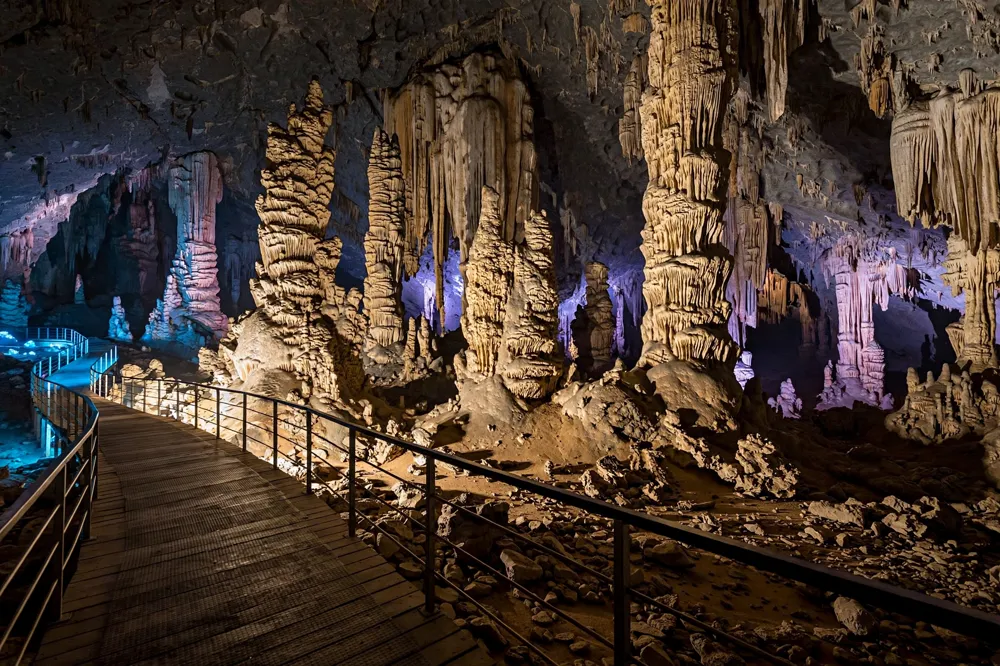
Combine Phong Nha Cave with Paradise Cave on the same day if you can. Paradise is a huge dry cave nearby, visited on foot along wooden walkways, and the contrast between the two is what makes the park so special. One cave you float through, the other you walk through, and both are completely different in character.
Bring cash for tickets and small expenses, wear sandals or shoes you do not mind getting a little wet when you step out of the boat, and carry a light layer, because the air inside the cave is noticeably cooler than outside. A phone torch is handy for looking at details, although the main formations are lit. On lucky days you will spot the cave’s resident swifts and bats near the entrance, a reminder that this place is also a working ecosystem, not just a showpiece.
If you only visit one cave in Vietnam, make it this one. Phong Nha delivers the full package: a scenic river journey, a silent underground world, and formations you will still be picturing weeks later.