Hang En Cave: Sleeping on a Beach Inside a Giant Cave
There are hotel rooms with a view, and then there is Hang En. After a day of trekking through Vietnamese jungle, you round a corner in the rock and stop in your tracks. Ahead of you opens a chamber so large it has its own weather: a river running through it, a jungle growing inside it, and a wide sandy beach where a row of small tents glows in the lamplight. You will eat dinner here, swim here, and sleep here, inside the third largest cave on Earth.
Hang En lies deep in Phong Nha-Ke Bang National Park in central Vietnam, a UNESCO listed wilderness of limestone mountains and some of the most extraordinary caves ever found. By volume, Hang En ranks third in the world, behind only its neighbour Son Doong and Deer Cave in Malaysia. It stretches about 1.6 kilometres long, up to 200 metres wide, and in places well over 100 metres high. Those are aircraft hangar numbers. Standing inside, they feel bigger.
The Gateway to Son Doong
Hang En was explored and officially announced in 1994 by members of the British and Vietnamese cave expedition teams who have mapped this region for decades. Its fame grew fast. The huge rear entrance of the cave appeared in the 2015 film Pan, and the cave featured live on American television in Good Morning America. For cavers, though, its deepest significance is geographical: the Rao Thuong River flows through Hang En and onwards into Son Doong, the largest cave in the world. Hang En is the gateway on that route, and the overnight stop on the first day of the Son Doong expedition.
The only company licensed to run tours here is Oxalis Adventure, and the standard trip is two days and one night. That single operator model keeps numbers tiny and the cave pristine. Places are limited, demand is heavy, and the trek books out well in advance.
Day One: Jungle, a Village, and the River
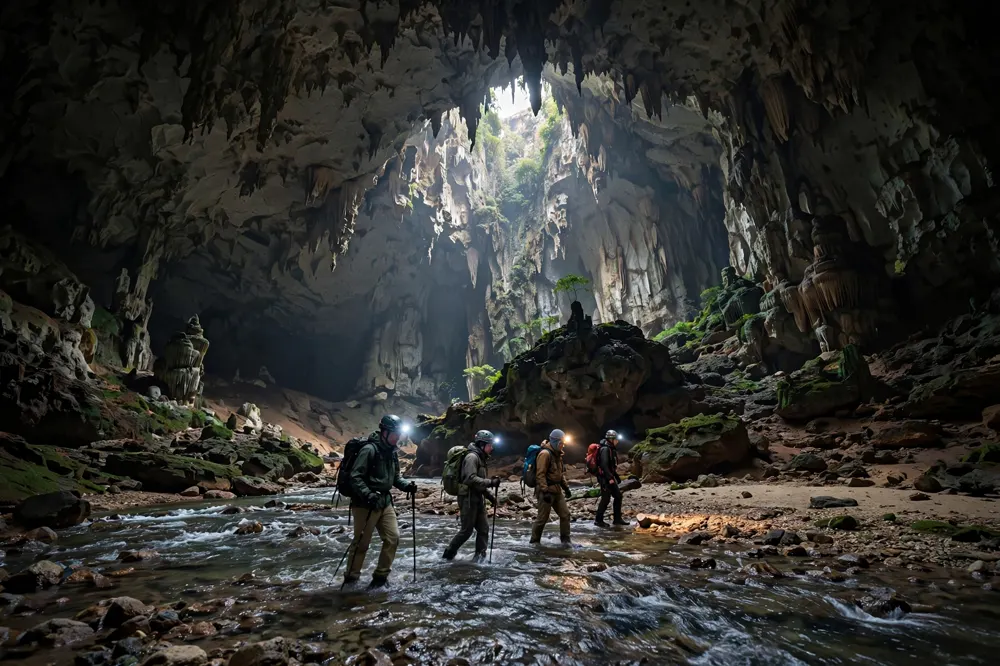
The adventure begins in the town of Phong Nha with a safety briefing and gear check, then a drive into the national park. The trail drops into dense jungle, and the walking is real walking: mud, stream crossings, and long green shade broken by shafts of sunlight. Along the way you pass Ban Doong, a small village of the Bru-Van Kieu people, the only settlement inside the park’s core zone. Lunch with the group here, surrounded by mountains that hide some of the biggest caves on the planet, is a memory in itself.
In the afternoon the trail follows the Rao Thuong River valley, and then the entrance of Hang En appears. You scramble down into the cave, cross the river where it runs cold and clear across the cave floor, and the main chamber opens up around you. It is genuinely difficult not to stop and stare. The ceiling disappears into darkness far above the reach of headlamps. Every sound echoes. And there, on a sweep of sand beside a turquoise pool, sits camp.
The Campsite Inside the Cave
A Beach Where No Beach Should Be
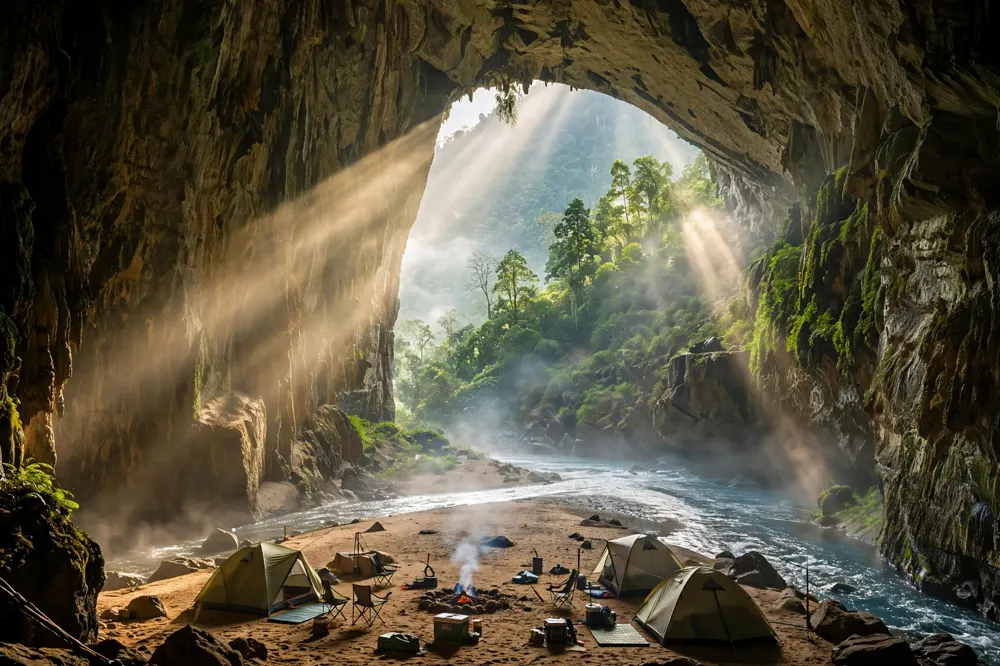
The Hang En campsite is often called one of the most spectacular campsites in the world, and it is hard to argue. Tents line up on soft sand at the edge of the underground river, porters and chefs set up a kitchen and dining area, and the vast exit arch of the cave frames a view of green jungle outside. Arrive in the late afternoon and you can swim in the pool before dinner, the water cool after the hot trek, while thousands of swifts pour home into the cave above you, wheeling and chattering against the last of the light.
Night and Morning Underground
Dinner inside a cave, cooked by the expedition team, tastes about twice as good as it should. Afterwards the darkness is absolute and the cave sounds take over: the river, dripping water, the faint rustle of the swifts settling high in the roof. Morning brings the cave’s party trick. In the cooler months, roughly December to February, sunlight streams through the great entrance and cuts visible beams through the cave’s moist air, lighting the camp like a stage. Photographers plan whole trips around those beams, and for once the photos do not exaggerate.
Day Two: Deeper In, Then the Climb Out
After breakfast the group explores further into the cave, past giant stalagmites and fossil filled walls, towards the enormous rear entrance where the river exits. The scale at this end is at its most dramatic, with the daylight arch towering above the boulders. Then it is back to camp for lunch, a last swim if you are quick, and the return trek: river crossings, jungle paths, and a long, steep climb up out of the valley that will remind your legs this was an expedition, not a stroll. Groups typically reach Phong Nha by early evening on the second day.
How to Book and When to Go
Tours run on fixed departures from around December through to mid September, pausing in the peak rainy season when the rivers become unsafe. Book directly with Oxalis as early as you can, because group sizes are small and the season is limited. The tour is priced as a premium expedition, and it includes national park permits, safety equipment, porters, guides and all meals, so most travellers judge it against other once in a lifetime trips rather than ordinary tours.
Fitness and Practical Tips
You need a solid level of fitness for Hang En. The trekking covers long distances over two days, with river crossings and one demanding climb, and you should be comfortable walking all day in heat and humidity. Good broken in trekking shoes that can get wet are the single most important thing you will pack. The operator provides helmets, headlamps, tents and bedding, so your own bag stays light. Book a rest day in Phong Nha afterwards, visit the park’s easier show caves if you still have the energy, and let the strangest part sink in: last night, you slept on a beach, and the roof above it was a mountain.