Postojna Cave: Ride the Underground Train to the Baby Dragons
Only one cave in the world begins with a train ride. At Postojna Cave in Slovenia, you take a seat in an open carriage, the lights of the entrance fade behind you, and a small electric train carries you 3.7 kilometres into the earth, past stone curtains, towering columns and halls big enough to hold a village. Then, just when the scale of the place has properly sunk in, you meet the residents: pale, blind, hundred year old amphibians that local legend calls baby dragons.
Postojna is the most visited cave in Slovenia and one of the great show caves of Europe. The full system runs for more than 24 kilometres beneath the karst hills of the country’s southwest, carved out over millions of years by the underground Pivka River. Visitors see the finest stretch of it on a tour that combines the famous railway with a guided walk of about an hour and a half in total.
The World’s First Cave Railway
Tourism at Postojna is older than the railway age itself. Visitors were exploring the cave in the early 1800s, and in 1872 the managers did something nobody had tried before: they laid rails inside a cave. The first carriages were pushed by hand, petrol locomotives followed, and since 1959 quiet electric trains have done the work. Today Postojna runs the world’s only double track cave railway, and riding it is half the experience.
The train travels at a gentle pace, but the scenery does not feel gentle at all. You duck through low passages, roll beneath ceilings fringed with stalactites, and then burst into chambers of absurd size. The Great Mountain, a vast hall piled with fallen blocks and dripstone towers, appears like an underground landscape rather than a room. Riders regularly gasp out loud. Nobody minds. Everybody is doing it.
Keep an eye out as the train glides through the Dance Hall, where great chandeliers of Murano glass hang improbably from the cave ceiling, installed in an era when balls were genuinely held underground for visiting dignitaries. It is a surreal little collision of Venetian elegance and raw limestone, and it sums up Postojna perfectly: this cave has been putting on a show for two hundred years, and it has got very good at it.
What the Walking Tour Shows You
The train drops you deep inside, and from there a guide leads you on foot through the cave’s most beautiful sections. Paths wind up and over the Great Mountain and through the Spaghetti Hall, where thousands of thin, straw like stalactites hang from the ceiling. Russian and Italian influences show in some of the older chamber names, a reminder that this borderland cave has been admired by travellers from every empire that passed through.
The Brilliant
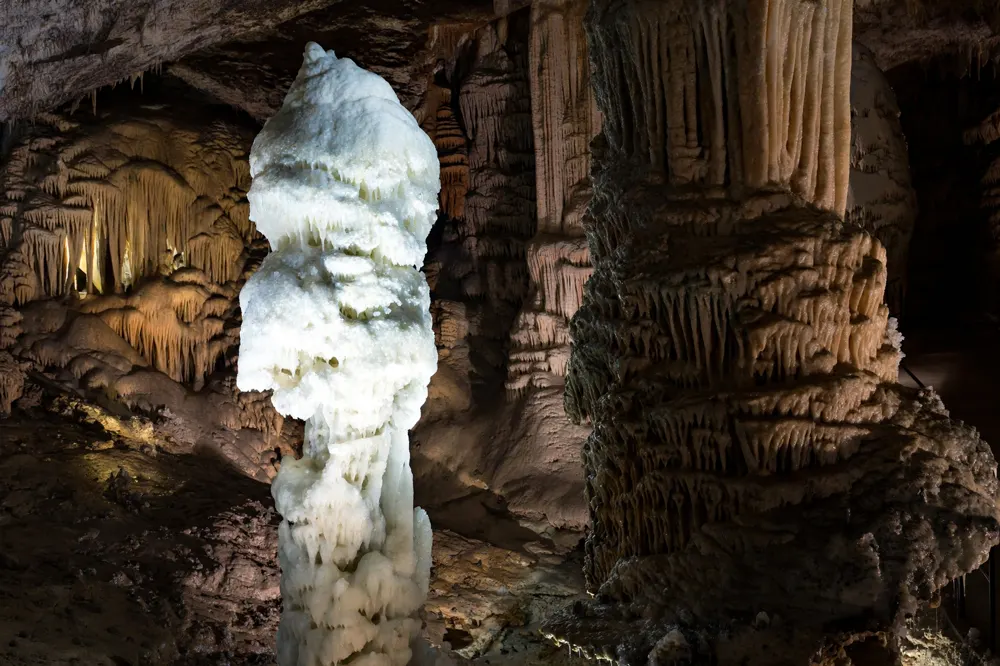
The symbol of Postojna Cave is a single stalagmite called the Brilliant. It stands about 5 metres tall and glows a pure, bright white, because the water feeding it carries almost perfectly clean calcite. Next to it rises a darker, older column, and the two together form the cave’s emblem. It sounds like a small thing, one white stone spike among thousands, but in the lamplight it genuinely shines.
The Concert Hall
The tour ends in the Concert Hall, a chamber some 40 metres high that can hold up to 10,000 people. Concerts really do happen here, and the acoustics are famous. Nearby you will also find one of the cave’s quirkiest claims to fame, an underground post office that has operated inside the cave for well over a century. Yes, you can send a postcard from underground, and people do, by the thousands.
Meet the Baby Dragons
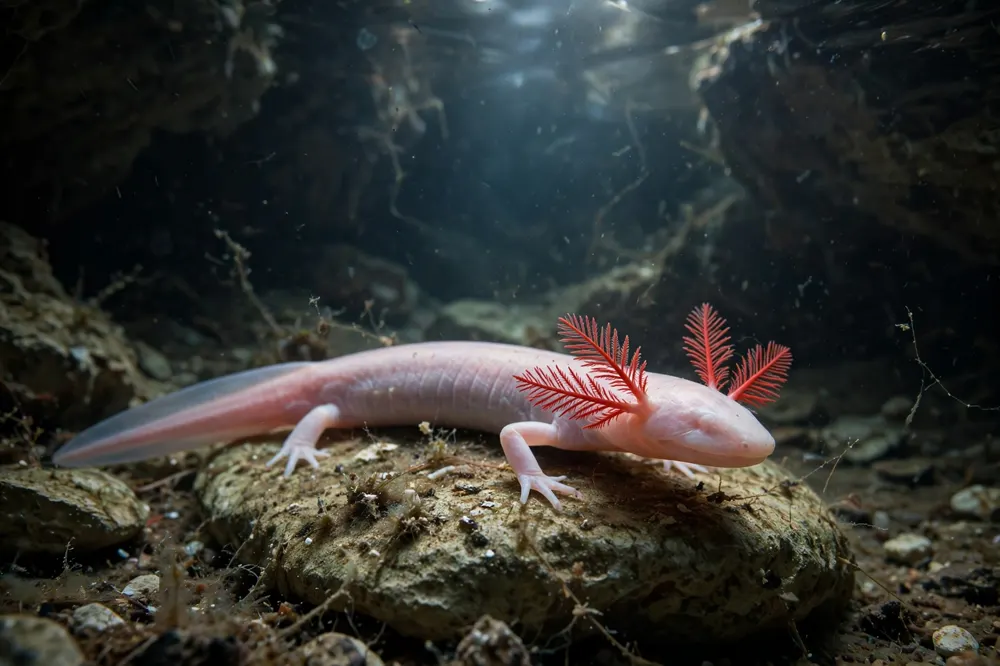
Postojna’s strangest inhabitant is the olm, known scientifically as Proteus anguinus. This cave salamander lives only in the underground waters of the Dinaric karst. It is blind, with eyes hidden beneath pale pink skin, breathes partly through feathery external gills, and has a lifestyle built entirely around patience. Olms can live for up to 100 years and can survive for years at a time without food, slowing their metabolism almost to a standstill.
Centuries ago, after heavy rains, olms were sometimes washed out of the caves into daylight. Villagers who found these soft, pale, serpent shaped creatures drew the obvious conclusion for the time: the caves must contain dragons, and these were their babies. The nickname baby dragons has never left. In 2016 Postojna made worldwide news when olm eggs laid in the cave’s vivarium hatched in front of infrared cameras, the first time the event had ever been observed. On the tour you can see living olms in a specially kept aquarium near the visitor route, close enough to watch them drift, weightless and unbothered, in the dark water.
How to Get There
Postojna Cave Park sits just outside the town of Postojna in southwestern Slovenia, and it is an easy day trip from Ljubljana, from the Slovenian coast, or from Trieste in Italy. Regular buses and trains connect Ljubljana with Postojna town, and drivers will find a large car park at the cave complex. A huge number of visitors pair the cave with Predjama Castle, the medieval fortress built into a cliff mouth a short drive away. The two together make one of the best single day outings in the country.
Best Time to Visit and Practical Tips
The cave holds a constant temperature of about 10 degrees Celsius all year, so bring a jacket and closed shoes even in August. Tours run throughout the day, with the most departures in summer. July and August afternoons get busy, so book tickets online in advance and aim for a morning slot if you can. In winter the cave is far quieter, and the experience feels more mysterious for it.
A few small things make a real difference. Arrive early enough to visit the exhibitions at the park entrance, which explain the karst world well. Keep hands off the formations, since skin oils permanently stain the stone. And give yourself a moment in the Concert Hall at the end, when the group spreads out, to simply look up. A hundred metres of rock above you, a train waiting to carry you back to daylight, and dragons in the water below. Postojna is not subtle, and that is exactly its charm.